
History of Caterpillar Skid Steers
Table of Contents:
- The Development of the First Agricultural Equipment
- Holt Manufacturing Company Becomes Holt Caterpillar Company
- Caterpillar Tractor Company as Part of World War I
- Postwar Crisis
- The New Directors and the New Company
- Expansion and the Series of Acquisitions
- What Does the Future Hold?
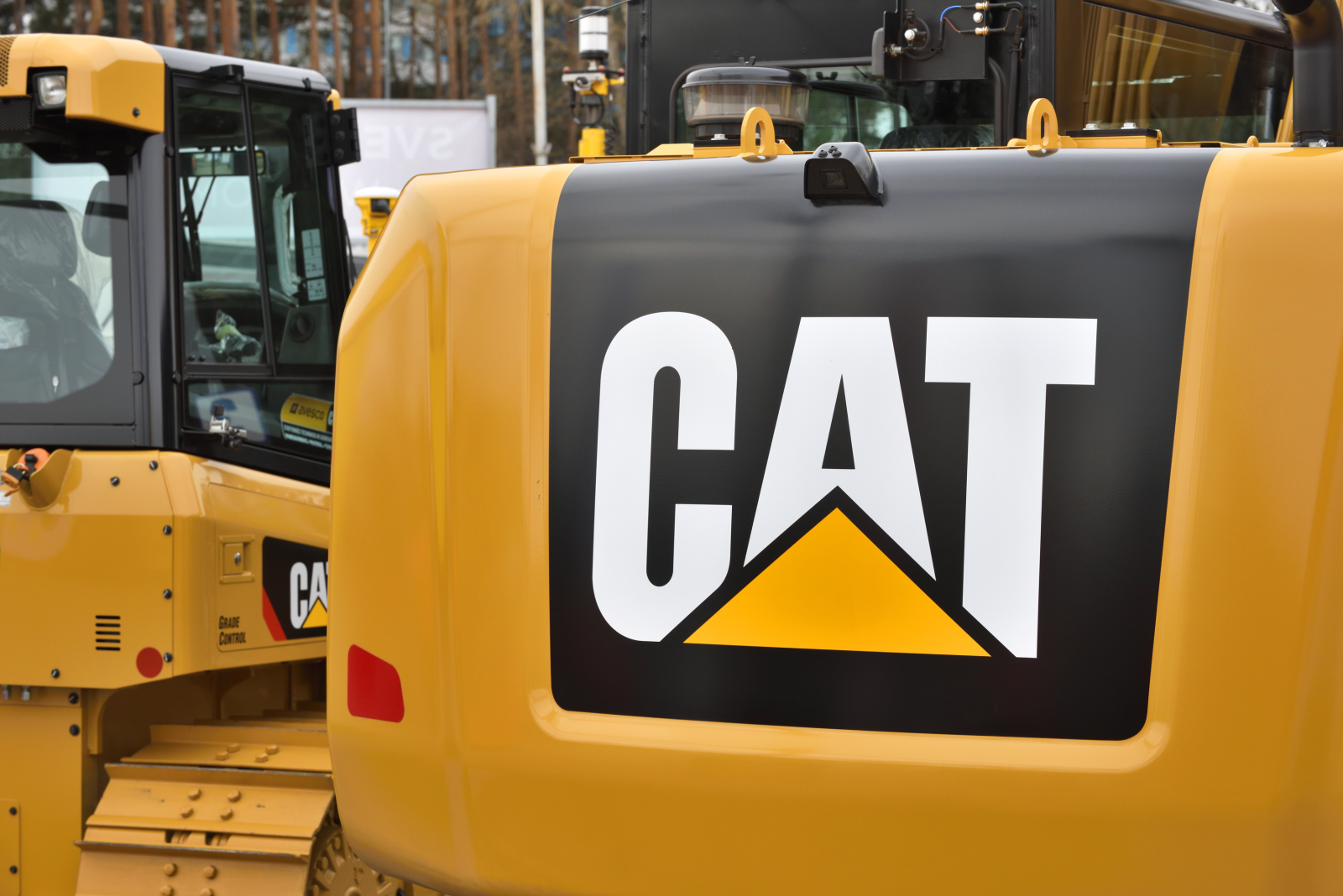
Table of Contents:
1. The Development of the First Agricultural Equipment
2.Holt Manufacturing Company Becomes Holt Caterpillar Company
3.Caterpillar Tractor Company as Part of World War I
4.Postwar Crisis
5.The New Directors and the New Company
6.Expansion and the Series of Acquisitions
7.What Does the Future Hold?
If I asked a question: what is the most popular construction equipment company in the world, Caterpillar would surely be among your answers. Apart from being one of the most recognizable skid steer manufacturers,Caterpillar isalsothe largest construction-equipment producer in the world.The skid steers with the characteristic CAT symbolare one of the most purchased construction equipment of all time. But how did the company start to operate? Let's take a look ata short history of Caterpillar skid steer.
The Development of the First Agricultural Equipment
The story of Caterpillar began as early as 1890, whenHolt Manufacturing Companyin California was producing heavy (even 450 kg in weight!) steam tractors.Benjamin Holt, the founderof Holt Manufacturing Company, struggled with the fact thatheavy tractors were sinking into the earth.His ongoing development projects, such as increasing the size of the wheels, made the caterpillar tractor company even less successful as thetractors became too complex, difficult to maintain, therefore, very expensive.
Other inventors of the world were a lot more successful than Holt, andin 1904, in England, Richard Hornsby & Sons developed a steel plate-tracked vehicleand patented the idea that seemed to work perfectly. Unfortunately, the market in the United Kingdom was limited, and in 1911 Hornsby decided tosell the patent to Benjamin Holt. He named the tractor'Caterpillar'after it was noticed that the tractor movement isthe spitting image of the animal crawling. The new soon-to-become Caterpillar tractor turned out to bea great successand a great-great-grandfather to Caterpillar machines.
Holt Manufacturing Company Becomes Holt Caterpillar Company
In 1909, Benjamin Holt's nephew, Pliny Holt, met a dealer, Murray Baker, in Illinois, who advised him ofan empty factory that would be perfect for their business. It used to manufacture farm equipment and steam traction engines, but the company owning it went bankrupt. Benjamin Holt asked his nephew to purchase it, and in the same year,12 employees started to produce Caterpillar equipment.Technically, they could not be named the Caterpillar machinery untilthe Caterpillar name was trademarked in 1910.
Within two years after retooling the plant,the company became a prosperous business,employing more than 600 workers. Caterpillar products were not distributed only within the United States but also to Argentina, Canada, and Mexico. Holt Manufacturing Company became Holt Caterpillar Company,and Peoria, Illinois stayed the headquarters of the Caterpillar tractor company until 2017, when it was moved to Deerfield, Illinois.
Caterpillar Tractor Company as Part of World War I
Not many know that Benjamin Holt track-type tractors tookan active part in World War I.It was before the United States even entered the War when 1200 track-type Caterpillar tractors were shipped to England, France, and Russia. The governments decided thatthe Caterpillar machines would be put to better use on the battlefield.Indeed, CAT machines turned out to work very well as... gun tractors. They were used for several years to haul medium guns.
In addition, CAT machines werethe inspiration for the development of the British tank.Even though the best tractor company was not subsequently given the task of building the first tank, the track-laying tractor was named'one of the most important military vehicles of all time'.
Postwar Crisis
CAT machines' success during Warresulted in their construction being prepared for military efforts. However, once the War ended, the need for heavy-duty equipment was no longer the case.Farmers needed light tractors, and all Caterpillar machines returned after War were simply too heavy. Also, the finances after the War were not good, so the Caterpillar tractor company had to get into debt tobuild brand-new, light machines.
What made matters worse, the competitors did not sleep during the War. C. L. Best Gas Tractor Company received financial support from the government and produced light equipment for farmers throughout wartime. Ultimately, bothBest Company and Caterpillar Inc were negatively impacted by the change in the economy in postwar times.
The New Directors and the New Company
After the death of Benjamin Holt in 1920, the time came to appoint a successor.Thomas A. Baxter took charge of Caterpillar Inc. He focused on the agricultural market and withdrew old heavy equipment from production. In addition,Baxter saw potential in the manufacturing of road construction equipmentthat was supported by the US$1 billion federal highway building program introduced by the American government.
The competition was fierce. Between 1907 and 1918, millions of dollars were spent on lawsuits and legal fees becausethe Best company and Caterpillar Inc. were fighting each other over trademark and patent issues.The period of unease finally ended when in 1925, C. L. Best and Holt Caterpillar merged, formingthe new company Caterpillar Tractor Co.Also, in 1925 Clarence Leo Best became the next CEO and occupied that position until 1951.
Thanks to the merger, both companies could consolidate their product lines and grow stronger, becomingthe leader in industrial equipment manufacturing. The first year, sales reached US$13 million; by 1929, the company sold US$52.8 million worth of Caterpillar machines.
Despite the Great Depression of the 1930s, Caterpillar Inc. grew stronger. The machines played a crucial role in constructing such famous sites asthe Golden Gate Bridge, the Grand Coulee Dam, and the Mississippi Levee construction project. They continued to expand and offer new technologies and solutions. One of them was the first motor grader. Gasoline engines replaced diesel engines, and in 1931 the company started the production of the Caterpillar Diesel Sixty Tractor.
The Caterpillar yellow color has not always beenthe company's distinctive feature. The change from grey to yellow happened in 1931 as the need for improved visibility on construction sites arose. The color choice has not been straightforward. It needed tobe visible from a distance and pleasing to the eye.Thanks to the paint specialists, a specific shade of yellow color was created especially for Caterpillar company andbecame an exclusive identification of Caterpillar tractor company.
Some of the product lines introduced after the merger was also fora different application than construction or agriculture.Mining equipmentneeded to be larger and more powerful in order to make mining more economical. Caterpillar expanded the product line to meet customers' needs and introduced wheel loaders, off-highway trucks, and hydraulic excavators.
During World War II,Caterpillar equipment helped the troopsagain. This time it was not so much in the battlefront but in construction battalions of the United States Navy. Caterpillar products wereideal for building airfields during the operations on the Pacific. The construction sector was thriving again after the War as efforts were made to rebuild the country. This was the case not only for the United States but for many other countries that suffered the consequences of the War.In 1950 Caterpillar Inc. turned into a multinational corporation.
Expansion and the Series of Acquisitions
The next step for the Caterpillar tractor company wasinternational expansion. And it was a successful one since the achievements were countless. The machines helped tobuild a superhighwaythat facilitated transportation through the Andes Mountains in Venezuela. Also, Caterpillar sold machines that helped with the completion of event sites for the 1956 Melbourne Olympics.
CAT even supplied equipment for use inthe most environmentally challenging locations in the world.The first Russian Caterpillar facility was built near St. Petersburg. Its first electrical substation was built in Leningrad Oblast after the dissolution of the Communist government. The facility was built in inclement weather conditionswith temperatures below 25 C. There was also evidence of the use of Caterpillar machines by the US military during Operation Deep Freeze III in Antarctica.
China is another Asian part where Caterpillar has their facilities. Caterpillar Suzhou has manufactured medium-wheel loaders and motor grades there since 2009.
In 1953 the Indian government purchased almost a hundred Caterpillar machinesto help to develop the country's roads.Nowadays, there are also three Caterpillar facilities in India thatmanufacture machines, engines, and generator sets.
Currently,Caterpillar products and components are manufactured in 110 facilities worldwide. Other major facilities include Belgium, France, Hungary, Italy, Poland, Russia, the UK, Mexico, and Brazil.
In addition to the many countries that Caterpillar Inc. expanded to andthe growing sales, Caterpillar's growth was also accelerated bythe numerous acquisitions that took place over the years.The first one occurred as early as 1951 when Trackson Traxcavators (tracked loaders) and pipelayers became a CAT brand. Othersignificant acquisitions include:
- Mentor (1965) - the acquisition allowedthe expansion of the Caterpillar forkliftline;
-International Harvester Company - the solar and turbomach divisions (1981) - the company extended their offer bythe industrial gas turbines;
-MWM Holding GmbH (2010) - thanks to this acquisition, Caterpillar includedgas and diesel-powered generator setsin their offer.
What Does the Future Hold?
Caterpillar continues to be calledthe best tractor company in the worldbut is nowthe leading manufacturer of heavy industrial equipment.But Caterpillar is not only a machine-producing company anymore. It expanded and diversified the ways of providing services to its customers by entering the business ofselling financial products and insurance. What comes next? We are holding our breath in anticipation ofCaterpillar company's future endeavors. Judging by the Caterpillar skid steer history, these will indeed be great endeavors.